
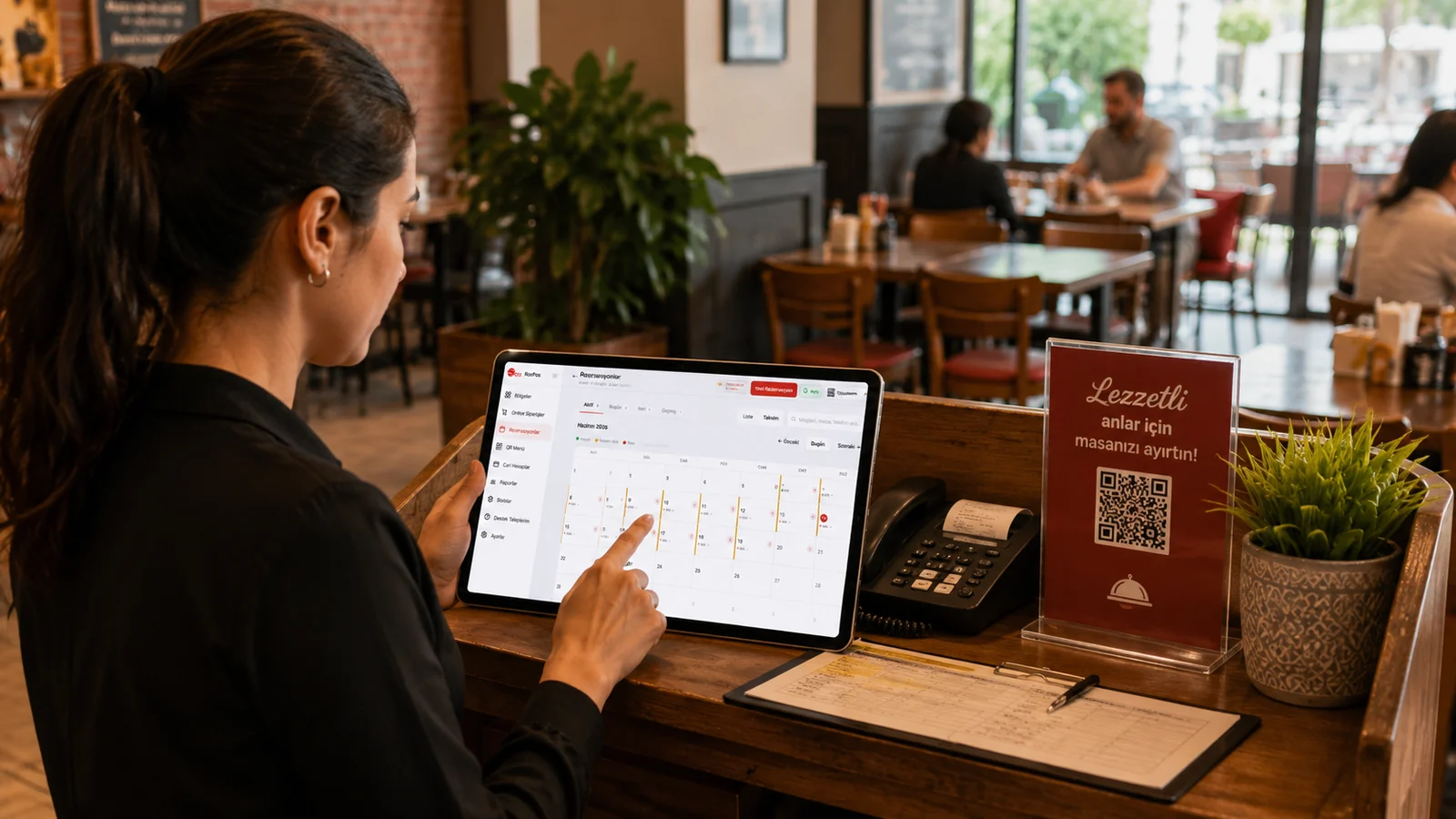
A restaurant that jots reservations on paper or a phone notepad fights clashing tables, no-show guests and idle capacity on a busy night. A restaurant reservation system ends this chaos: it takes reservations by date, time, table and hall, plans occupancy and lowers no-show risk. This post explains why a reservation system is needed, with concrete reasons.
1. It Reduces No-Shows
A no-show is direct lost revenue; the table looks booked yet stays empty. A reservation system reduces no-shows with confirmation/reminder flows and releases unfilled records in time.
2. It Plans Occupancy
Seeing how many tables will be full at each hour clarifies staffing and kitchen planning. Forecasting occupancy also affects turnover; we covered it in increasing table turnover.
3. It Manages the Table Plan Live
Reservations by date, time, table and hall appear live on one screen; expired records are auto-filtered. The host or manager instantly knows when each table frees up.
Reservation Management with RoxPos
RoxPos's reservation system takes reservations by date, time, table and hall; auto-filters expired records and manages active ones on one screen. As reservations are integrated with the POS, the table check opens directly when the guest arrives — and combined with QR ordering at the table, it speeds up service end to end.